


The cargo arrives.The paperwork doesn't.

SmacoteQ gives each shipment one shared workspace. Its documents are approved once and issued as records the receiver can check, and the bill of lading moves as a digital title instead of by courier.

Built on TradeTrust. Pilots run on Ethereum and XDC test networks.

On paper, the documents
lose the race.

A short voyage shows it best. In this example a container leaves Shanghai for Singapore and the ship arrives in six days.

The original bill of lading goes by courier to the exporter's bank, then to the importer's bank, and each bank checks it. Under UCP 600 each one may take up to five banking days. Until the paper reaches the importer, the goods stay at the port.

6 daysthe container waits at the port in this example, from day 6 to day 12.

The ship

At seaContainer waits at the portArrives SGSIN

The original bill of lading

SignedCourierExporter's bank checksCourierImporter's bank checksHanded overGoods released
Example timeline. Voyages, couriers and bank checks vary; UCP 600 article 14(b) allows each bank up to five banking days.

Here is the same shipment on SmacoteQ.

Paper comes in

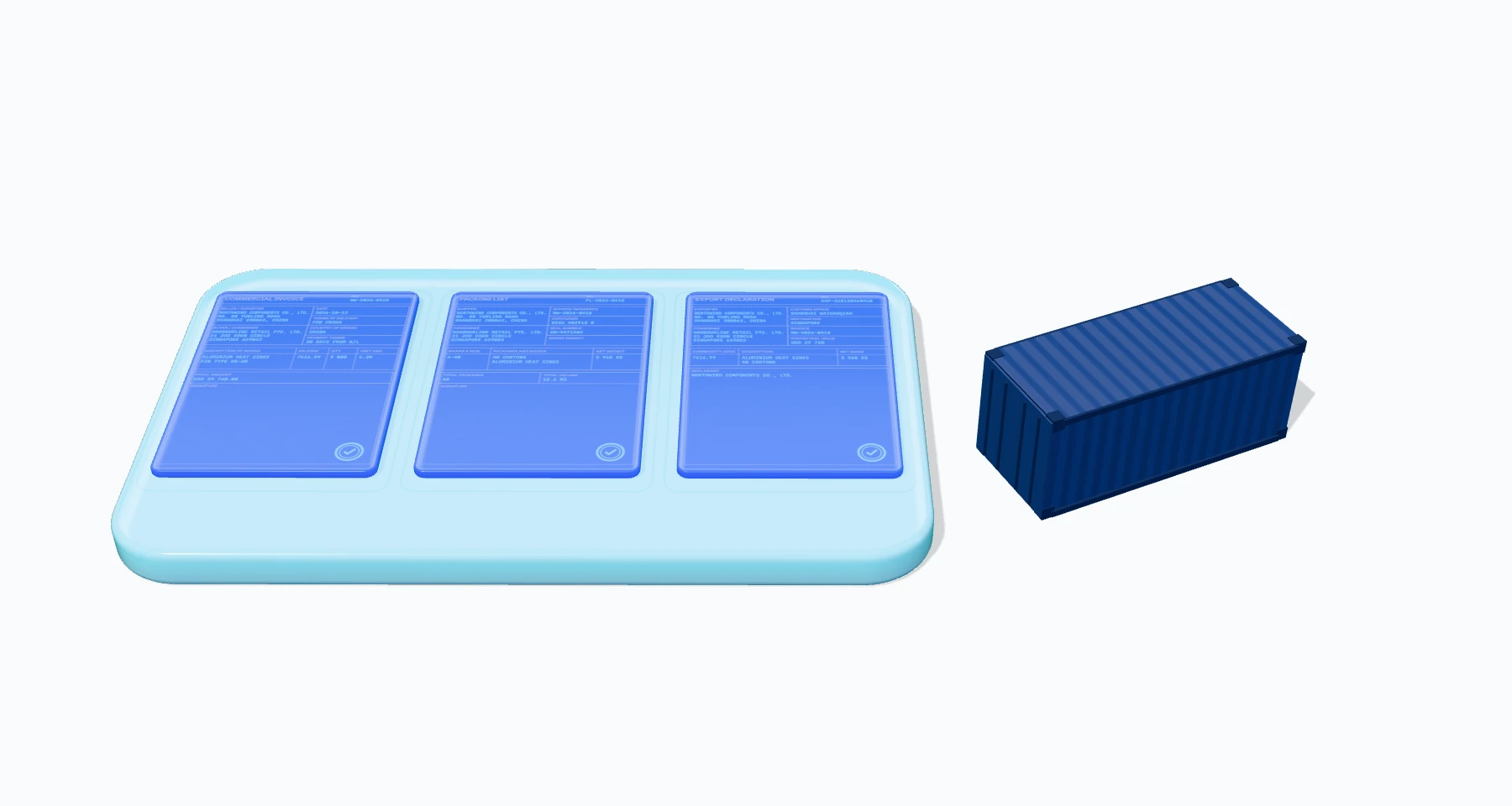
The invoice, packing list and customs declaration are uploaded to the shipment. AI reads each one so reviewers can check the values, and the invoice and packing list are compared with the customs declaration.

1 of 6

Example shipment, Shanghai to Singapore. The companies are fictional.

  1. Paper comes in

    The invoice, packing list and customs declaration are uploaded to the shipment. AI reads each one so reviewers can check the values, and the invoice and packing list are compared with the customs declaration.

  2. Everyone approves

    The uploader asks the others on the shipment to review. Each approval is tied to that exact file. If someone asks for a change and the file is replaced, its approvals reset.

  3. The draft bill of lading

    The uploader completes any missing fields and issues each file as a tamper-evident record. The forwarder builds the draft bill of lading from the issued invoice and packing list, and rules block it if details don't match. Exporter and importer approve it.

  4. The carrier issues the title

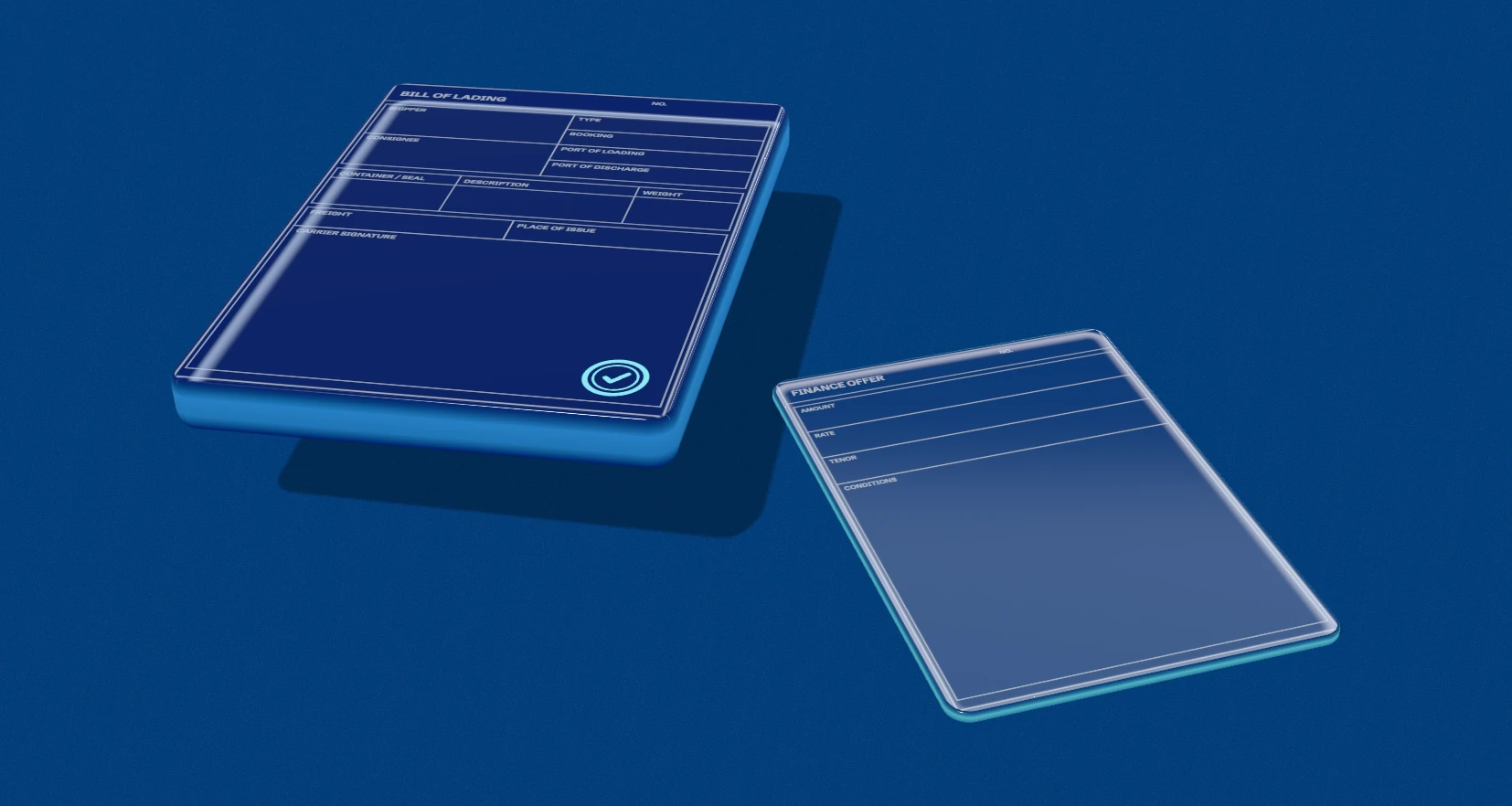
    The forwarder sends the draft to the carrier, who approves it and issues the electronic bill of lading: a digital title with an owner and a holder. The goods are loaded. Cargo and paperwork move on separate tracks.

  5. Finance, if you need it (optional)

    Once the goods are loaded, the exporter can apply for finance against the title. Lenders on the shipment make offers, compared side by side. The chosen lender holds the title until both sides confirm the payout and the repayment, then hands it back.

  6. Arrival

    The exporter transfers the title to the importer. When the goods arrive, the importer surrenders it to the carrier, who retires it and releases the goods. The shipment is marked complete.

Don't trust us. Verify.

Every issued record carries its own proof. Whoever receives one can check three things:

  1. Not changedThe file matches the fingerprint recorded when it was issued.
  2. Issued and still validIt is on the network and hasn't been revoked or retired.
  3. Issuer confirmedThe issuer's smacoteq.com address points to the record's trust anchor.

Records follow the TradeTrust standard. The issuer's identity is a DNS record under smacoteq.com, set up once the company is verified.

Example record
Document
Commercial invoice NW-2026-0418
Fingerprint
9f2c41d7 e08a5b63 1c9e77f0 a4d2e41a
Network
Ethereum Sepolia, a test network
Issued by
northwind-components.smacoteq.com

For traders

Exporters, importers, forwarders and carriers.

  • One workspace per shipment, shared with the companies on it.
  • AI reads invoices, packing lists, purchase orders and customs forms. People confirm every value.
  • The draft bill of lading is built from the issued invoice and packing list, and rules block it when details don't match.
  • Issue, transfer and surrender electronic bills of lading, promissory notes, bills of exchange and warehouse receipts.
Ask about a trader pilot

For banks and lenders

Trade finance teams.

  • Check every document before you lend: unchanged, validly issued, and from whom.
  • Lend against a title that moves to you on the network while the loan runs, and back after repayment.
  • Financing the same record twice, or an identical file, is blocked.
  • Payout and repayment are confirmed by both sides. Seven finance products, from pre-shipment to factoring.
Ask about a lender pilot

Run a pilot with us.

Bring one real trade lane and the companies on it.

Pilots run on test networks, Ethereum Sepolia and XDC Apothem. Support for the Ethereum, Polygon and XDC main networks is built in.

Companies apply online and get access once they're verified.